Kids Don’t Float Loaner Board Program
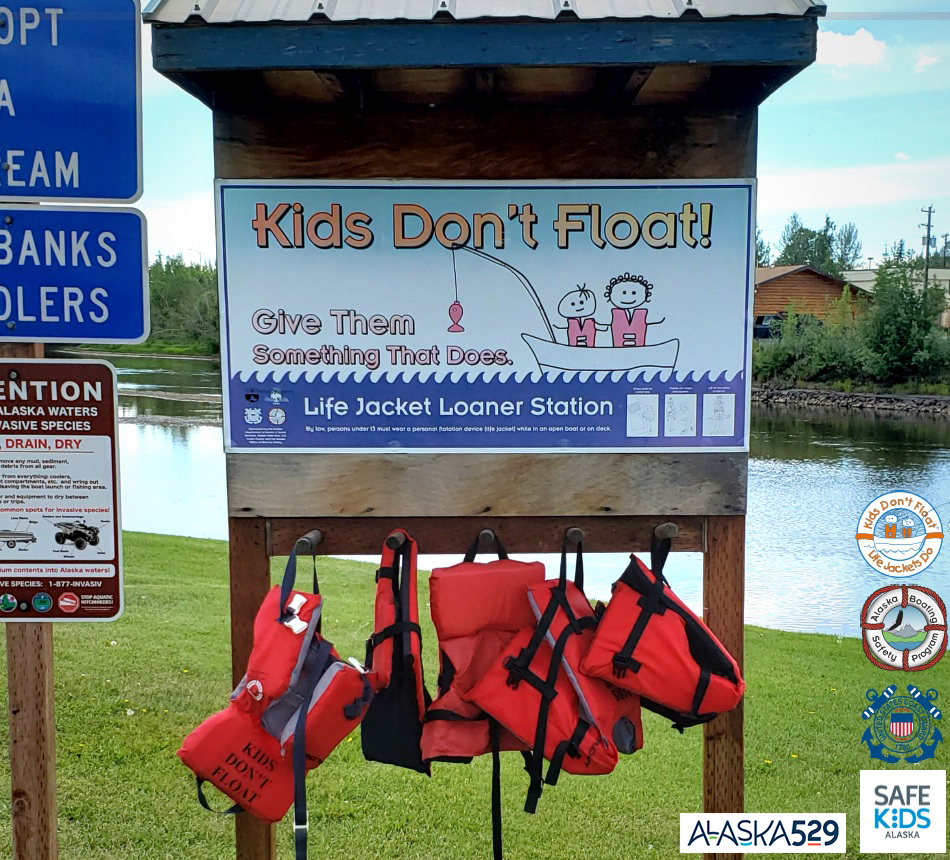
The Kids Don’t Float Life Jacket Loaner Board Program was developed to address Alaska’s high drowning rate for youth. The program began in 1996 in Homer, Alaska and has grown into a state-wide grassroots effort. Life jacket loaner boards are established at harbors and public boat access areas across Alaska. The loaner boards provide life jackets that can be borrowed for free and returned after use. You can learn more about the history of the Kids Don’t Float Program here: https://dnr.alaska.gov/parks/boating/kdf.htm.
Have you, or someone you know, been saved by a Kids Don’t Float life jacket during a boating emergency? Please fill out this form to let us know:
https://www.surveygizmo.com/s3/5477475/Did-a-life-jacket-save-your-life
Continue reading to find the answers to some frequently asked questions about the Kids Don’t Float Life Jacket Loaner Board Program, and to learn more about life jacket serviceability and proper fit.
**IMPORTANT** To get new life jackets for a loaner board, the sponsor must fill out the order form between September 1 and November 22. If you wait and request life jackets in the spring or summer, we cannot guarantee we will be able to accommodate your request until the following year.
FREQUENTLY ASKED QUESTIONS:
What is a life jacket loaner board sponsor responsible for?
A life jacket loaner board sponsor is responsible for the upkeep of the board itself. They are also in charge of keeping track of when the loaner board needs new life jackets and submitting an order with the Alaska Office of Boating Safety using this order form: https://www.surveygizmo.com/s3/5465486/KDF-Loaner-Board-Registration. Order must be submitted between September 1 and November 22 for the life jackets to be received for the following boating season. Life jackets are provided for free to KDF loaner boards. The life jacket loaner board sponsor is also responsible for storing the life jackets in a safe location during the winter months and returning them to the board in the spring.
How do I become a life jacket loaner board sponsor?
If you’re interested in taking over sponsorship of a local loaner board that no longer has a sponsor, reach out to us at dnr.kdfloanerboard@alaska.gov. If you’re interested in creating a new loaner board and being the sponsor, continue reading these FAQs for more info.
I know of a place that could use a life jacket loaner board. How can I get one put there?
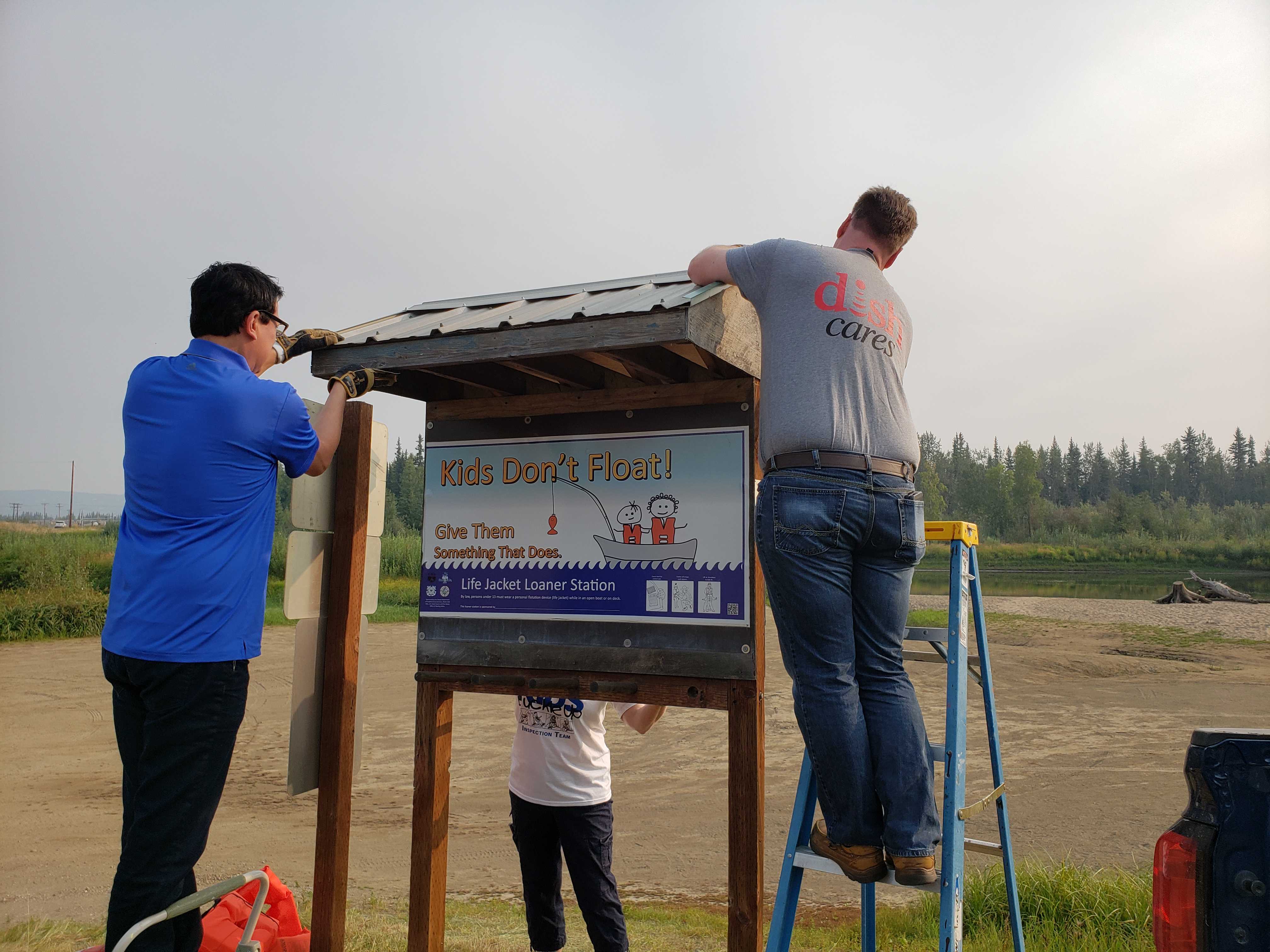
The Kids Don’t Float Program does not provide materials or labor to build new life jacket loaner boards. Each loaner board needs to have a local sponsor who can source materials and labor for it to be built, and who can keep track of when it needs new life jackets. The Kids Don’t Float Program provides the life jackets free of charge, as well as a vinyl banner that can be attached to the board. We can also provide a materials list and some basic plans for building the board. Before a new loaner board can be built, the sponsor must have permission from the landowner. You can register a new board and order free life jackets by filling out this form: https://www.surveygizmo.com/s3/5465486/KDF-Loaner-Board-Registration Reach out to us at dnr.kdfloanerboard@alaska.gov if you have more questions.
The loaner board in my community needs more life jackets. How do I get those?
If you are the loaner board sponsor, you can order free life jackets for the loaner board by using this online order form: https://www.surveygizmo.com/s3/5465486/KDF-Loaner-Board-Registration. Orders must be submitted between September 1 and November 22 for the life jackets to be received for the following boating season. If you are not the loaner board sponsor, you can reach out to us at dnr.kdfloanerboard@alaska.gov to find out who is.
It’s summer now and I want to get life jackets for the loaner board I sponsor. Can you send some to me?
Unfortunately, we cannot always accommodate requests for life jackets when you wait until spring or summer to reach out. To ensure your community loaner board has life jackets for summer, make sure the order form is filled out between September 1 and November 22.
I have some life jackets I want to donate to this program. Where can I drop them off?
You can donate life jacket to the Kids Don’t Float program as long as they are in serviceable condition (see below). You can drop them off directly at a loaner board location near you, or you can drop them off at various State Parks offices around Alaska or at REI. Find a list of locations here: https://dnr.alaska.gov/parks/boating/jktdonate.htm
What size is the Kids Don’t Float Life Jacket Loaner Board banner/sign?
The vinyl banner is roughly 2’ x 4’. We provide the banners free of charge. If you have a new board that needs a banner, or if the loaner board you sponsor has an old sign that needs to be replaced, you can order a new one from us using this online order form: https://www.surveygizmo.com/s3/5465486/KDF-Loaner-Board-Registration
MORE ABOUT LIFE JACKETS:
Life Jacket Serviceability:
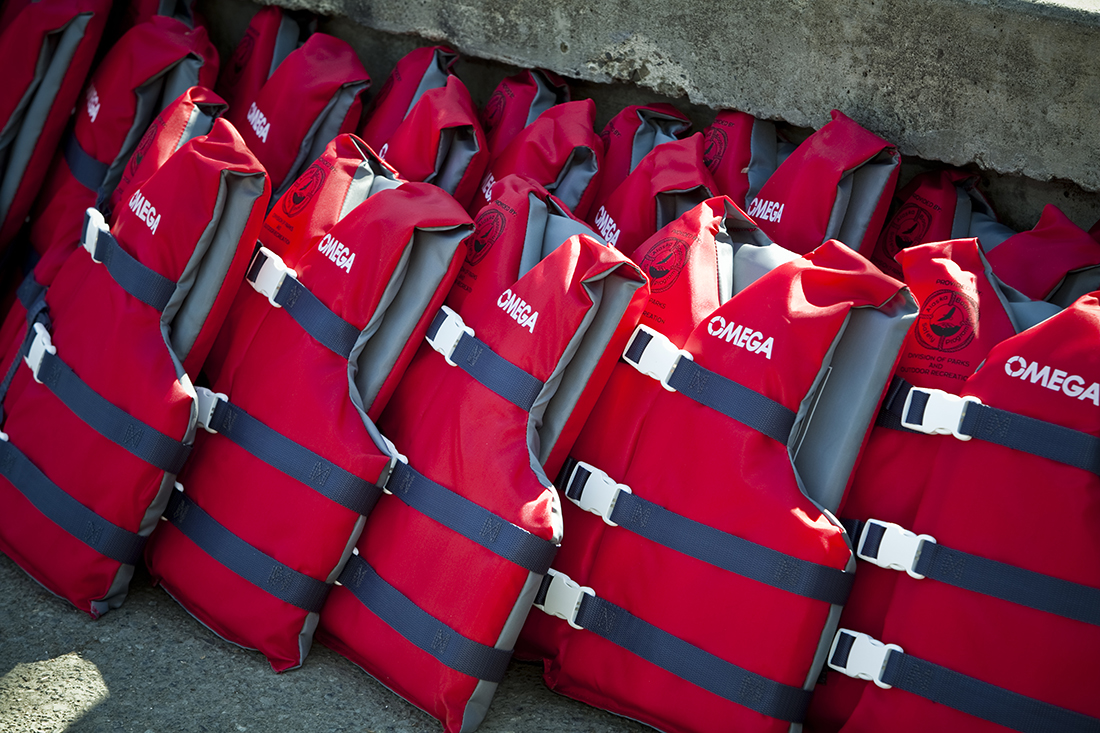
Before wearing (or donating) a life jacket, it’s important to check if it’s in serviceable condition. Inspect the life jacket for any broken parts (like buckles, zippers, or straps), any rips or tears in the fabric or straps, or any mold or mildew. If any of these are present, the life jacket is unserviceable and needs to be replaced. Learn more about how to inspect a life jacket by watching this short video: https://www.youtube.com/watch?v=b9j2T3NW_tg&t=7s
Proper Fit:
A life jacket that doesn’t fit may not keep you safe in the way it was designed to. Follow these steps to ensure proper fit:
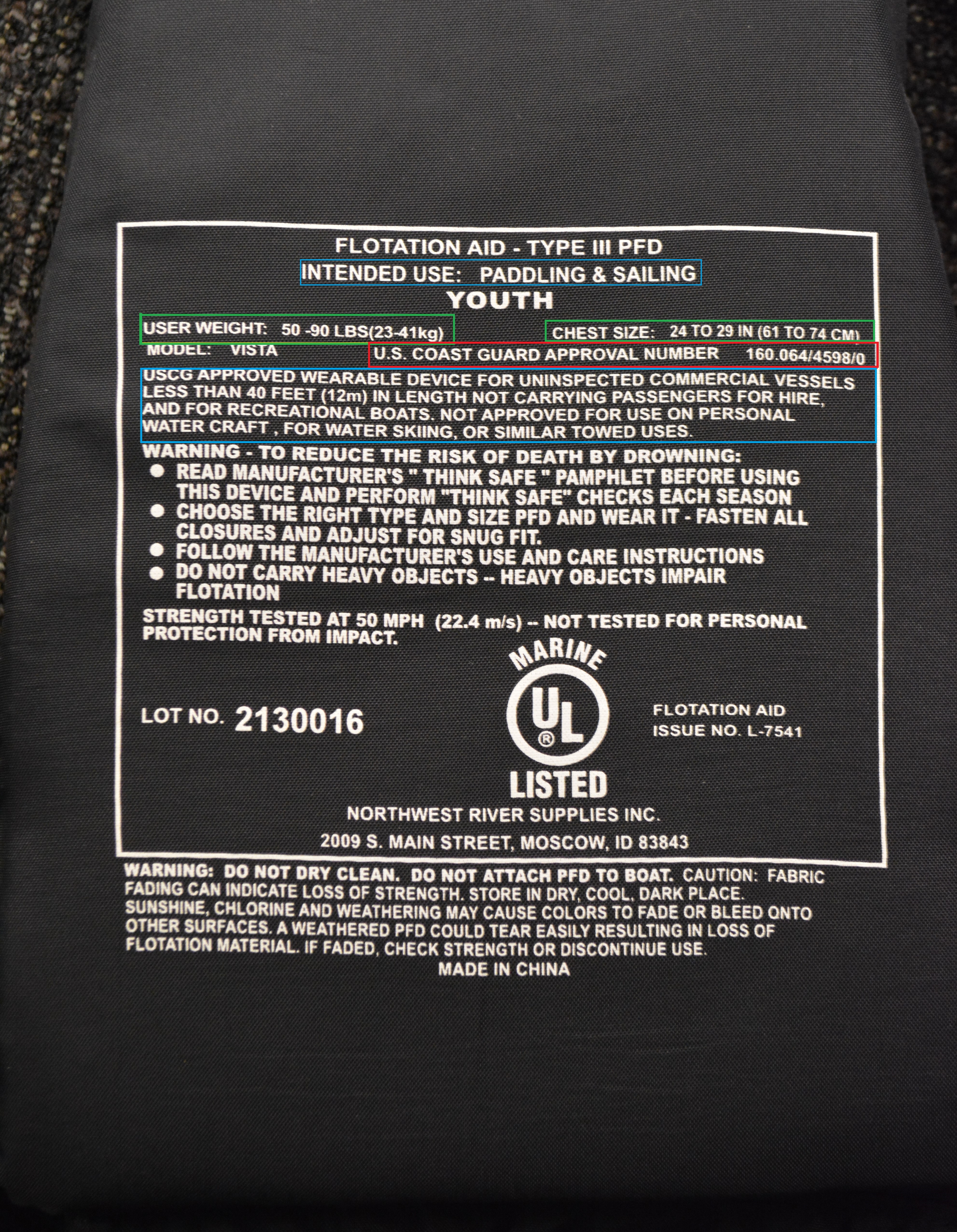
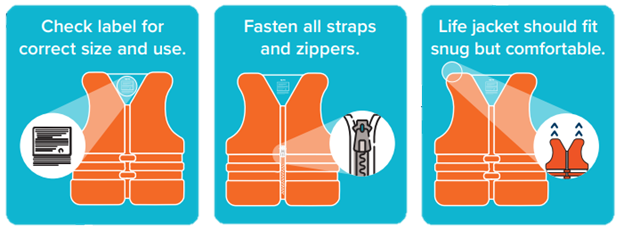
- Always start by checking the manufacturer's label to ensure the life jacket is rated for the wearer's exact weight range and chest size.
- Put the life jacket on and close all front zippers, buckles, and clips. Tighten all straps starting from the waist and working your way up. The jacket should feel snug.
- Lift the life jacket shoulder straps up. If it pulls up past your chin or ears, it is too big or needs further tightening.
Alaska’s Life Jacket Laws:
- A U.S. Coast Guard-approved life jacket must be carried on board for each person on the boat and must be readily accessible. The easiest way to ensure a life jacket is readily accessible is to wear it.
- Persons under 13 years old must wear a U.S. Coast Guard-approved life jacket when on an open boat, on an open deck, or when being towed on water skis or other devices.
- Life jackets must be of the proper size and fit for This life jacket is too big! the intended wearer. Adult sizes do not satisfy the legal requirements for children or vice versa.
- Life jackets must be used in accordance with the manufacturer’s label and owner’s manual. Some life jackets must be worn to satisfy carriage requirements.
- Life jackets must be in serviceable condition, meaning they must be free of defects, such as missing or waterlogged flotation material or broken zippers, buckles, or straps. Special attention should be given to inflatable devices, which should be carefully maintained per manufacturer recommendations.
Read The Label:
- Is this life jacket U.S. Coast Guard approved?
- What are the weight and chest size limits?
- Is this life jacket restricted to any specific uses?